Dental Bonding for Cosmetic Confidence Without a Major Procedure

A surprising number of people live with small flaws in their smile that bother them far more than anyone around them realizes. It might be a chipped front tooth from a coffee mug, a narrow gap that catches the eye in photos, or uneven edges that make otherwise healthy teeth look worn. These are not always serious dental problems, but they can carry real emotional weight. People smile with a hand over their mouth, angle themselves away from cameras, or speak a little more carefully than they used to.
That is where dental bonding earns its reputation. It is one of the most practical cosmetic treatments in dentistry because it can improve the appearance of teeth without surgery, without months of treatment, and usually without the kind of cost that makes patients put off care for years. In the right case, bonding can deliver a meaningful change in a single visit. For patients who want cosmetic confidence without committing to a major procedure, that matters.
Dental Bonding is often underestimated because it sounds simple. In reality, simple is part of its strength. A skilled dentist can use tooth-colored composite resin to reshape, repair, and refine the smile in ways that look natural and feel immediate. When patients ask for something conservative, affordable, and fast, bonding is often part of that conversation.
Why bonding appeals to so many adults
Cosmetic dentistry is not always about dramatic smile makeovers. Very often, it is about removing one distraction. One dark spot. One chipped edge. One tooth that sits slightly differently than the others. Those details can draw the eye, especially in the front of the mouth, even if the teeth are healthy overall.
Bonding works well because it addresses these small to moderate concerns directly. Instead of reducing a tooth significantly to place a crown or veneer, the dentist applies composite resin in thin layers, shapes it by hand, and polishes it to blend with neighboring teeth. Done well, it can look seamless. The result is not a new smile in the artificial sense. It is your smile, just less interrupted.
That distinction matters to many patients. Some want improvement, not reinvention. They do not want friends asking what dental work they had done. They want people to notice that they look refreshed, not altered. Bonding fits that goal better than many people expect.
For patients exploring Dental Bonding in Bakersfield CA, this conservative approach is often especially appealing because life does not always leave room for extensive treatment plans. Parents, professionals, students, and retirees alike tend to value procedures that do not require multiple long appointments or a difficult recovery. Bonding usually fits neatly into everyday life.
What dental bonding can actually fix
The best uses for bonding are specific and practical. It is not a cure-all, and ethical cosmetic dentistry depends on saying that plainly. Bonding is most effective when the tooth is structurally sound and the concern is mainly cosmetic or limited in size.
A few examples come up repeatedly in practice. Small chips on front teeth are ideal candidates, especially when the rest of the tooth is healthy. Bonding can also close minor spaces between teeth, smooth rough or uneven edges, cover certain stains that whitening cannot shift, and make a tooth appear more symmetrical if it is slightly misshapen or shorter than its neighbor. In some cases, dentists also use bonding to protect a root surface exposed by gum recession, although that moves beyond purely cosmetic treatment.
One of the most satisfying bonding cases is the patient with a tiny but stubborn flaw that has bothered them for years. I have seen people deliberate for months over a front tooth chip that happened in seconds. To everyone else, it looked minor. To them, it was the first thing they saw in every mirror. When that chip is repaired properly, the relief is often immediate. It is not vanity. It is the feeling of getting rid of a constant visual irritant.
The appointment is usually more comfortable than people expect
A lot of the anxiety around cosmetic treatment comes from imagining drills, injections, and long sessions in the chair. Bonding is often gentler than that, particularly when the work is limited to adding material rather than removing it.
The process usually starts with shade selection. Matching composite to natural tooth color is both technical and artistic. Teeth are not one flat shade. They have variation, translucency, and light-reflecting qualities that become obvious in the front of the mouth. A careful dentist pays attention to all of that before the resin ever touches the tooth.
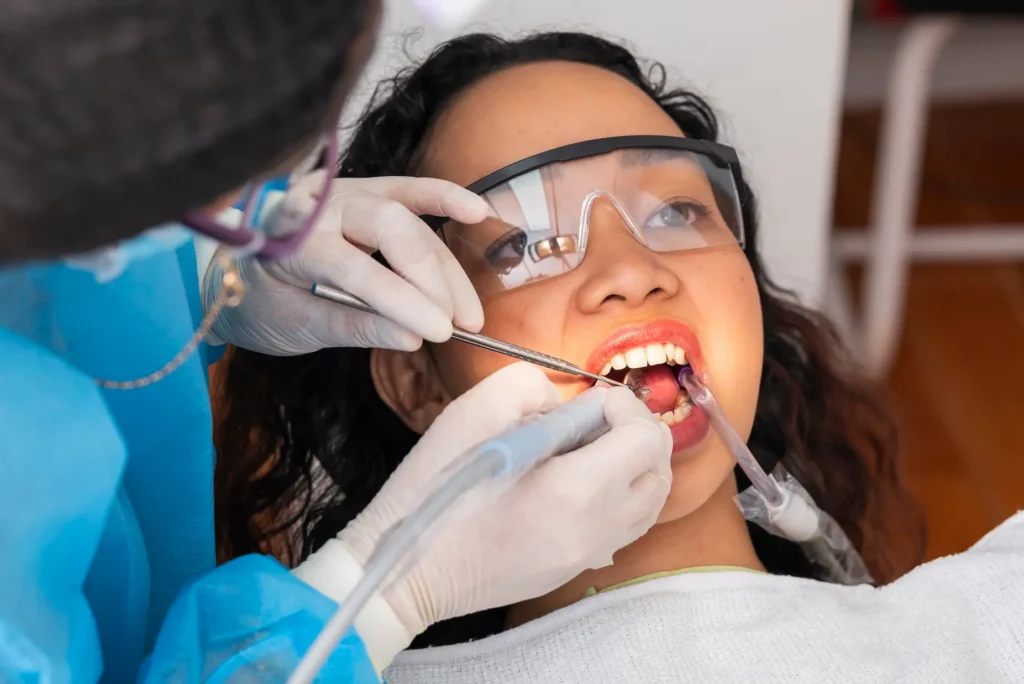
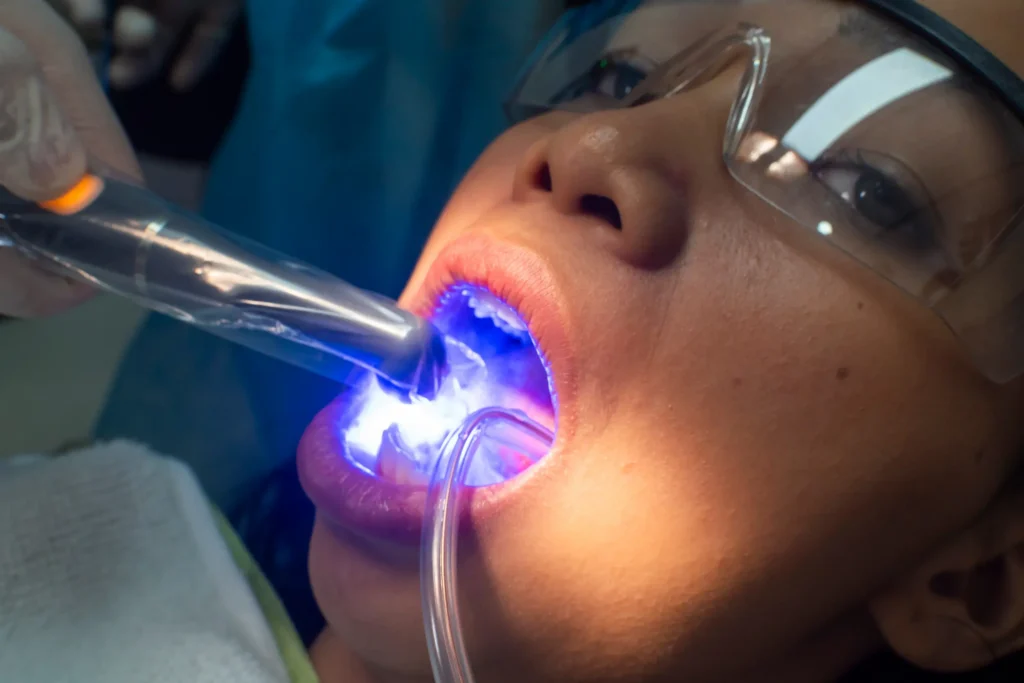
The tooth surface is then prepared so the material can adhere. In many cases, this involves only minimal roughening and conditioning of the enamel. If no decay is present and the change is modest, anesthesia may not be necessary. Composite resin is applied, sculpted, and hardened with a curing light in stages. The dentist refines the contours, checks the bite, and polishes the surface until it blends with the surrounding enamel.
Patients are often surprised by how immediate the transformation feels. They walk in with a chip or gap, and they walk out seeing a smoother, more balanced smile. There is no temporary restoration, no lab waiting period, and typically no downtime beyond avoiding habits that could damage a fresh restoration.
Bonding is conservative, but skill matters tremendously
Because bonding can be completed quickly, some people assume it is straightforward in every office. The material itself is common. The artistry is not.
The challenge with cosmetic bonding is not merely attaching resin to a tooth. It is making the repair disappear in shape, texture, and color. Front teeth are unforgiving. If the surface is too flat, too opaque, too bulky, or too shiny in the wrong way, the eye catches it instantly. This is where clinical judgment and aesthetic experience make a visible difference.
A well-done bonding case respects the proportions of the smile, the patient’s bite, the way light passes through enamel, and even the person’s age. Younger teeth often have different translucency and edge characteristics than older teeth. Matching one central incisor to the one next to it can require far more nuance than a patient expects. That is why consultation matters. A dentist should explain what bonding can achieve, where it may have limitations, and whether another treatment would be more durable or more aesthetic in the long run.
This is particularly relevant when someone is comparing Dental Bonding to porcelain veneers. Veneers can be beautiful and highly durable, but they require a bigger commitment in cost, planning, and tooth preparation. Bonding occupies a different lane. It is conservative, versatile, and often ideal when the goal is improvement without escalation.
Where bonding shines, and where it does not
One of the healthiest conversations in cosmetic dentistry is the one that includes trade-offs. Bonding has genuine advantages, but it is not always the best answer. Teeth that are heavily damaged, badly worn, or affected by major bite issues may need a stronger or more comprehensive solution. Patients who grind their teeth forcefully at night can chip or wear bonding more quickly. Very large spaces between teeth can sometimes be closed with bonding, but the final tooth proportions may not look as natural as the patient hopes.
Staining is another point worth discussing honestly. Composite resin does not respond to whitening the same way natural enamel does, and it can pick up discoloration over time, particularly in people who smoke or drink a lot of coffee, tea, or red wine. That does not mean bonding will look bad quickly. It means maintenance matters, and expectations should be realistic.
There is also the issue of edge strength. Bonding on biting edges can last well, but it is still more vulnerable than porcelain in certain situations. Someone who bites pens, tears open packages with their teeth, or chews ice is likely shortening the lifespan of any cosmetic restoration, and bonding tends to show that wear first.
None of this is a reason to avoid it. It is simply the difference between a thoughtful cosmetic decision and an impulsive one.
The value proposition is hard to ignore
Patients often ask some version of the same question: if bonding is faster and less expensive, what is the catch? The answer is that the benefits are real, but so are the limits.
The biggest practical advantage is that bonding usually preserves more natural tooth structure than more invasive restorations. That matters not just philosophically, but biologically. Healthy enamel is worth protecting whenever possible. If a conservative treatment can solve the problem, many dentists prefer to start there.
The second advantage is financial accessibility. Exact fees vary by region, complexity, and how many teeth are involved, but bonding is generally one of the more budget-friendly cosmetic options. That allows patients to address concerns they might otherwise postpone indefinitely. A small chip can be repaired now instead of becoming a source of self-consciousness for another five years.
The third advantage is flexibility. Bonding can sometimes serve as a long-term solution, and in other cases it can act as a conservative first step while a patient decides whether they eventually want veneers, orthodontics, or whitening. There is value in treatments that do not lock patients into a major path before they are ready.
Bonding and confidence often have a direct link
Dentists see this dynamic constantly. A patient comes in asking whether a small defect can be fixed, almost apologetic for caring so much about something that sounds minor. Then the repair is done, the mirror comes up, and the entire face softens. They smile wider, more naturally, and with less hesitation.
That is not superficial. Facial expression shapes social confidence in quiet ways. Job interviews, family photos, first dates, public speaking, even casual conversation at the grocery store, all of those moments are affected by whether someone feels at ease showing their teeth. A tiny aesthetic improvement can have an outsized effect because it removes a mental barrier the person has been carrying around for years.
One patient example stays with me because it captures the appeal of bonding so well. She had a front tooth with a corner chip from years earlier. It was not medically urgent, and she kept putting it off because she assumed cosmetic dentistry meant veneers or a major cost. When she learned that bonding could repair it in a single visit, she was skeptical. Afterward, she said the surprising part was not how much different her smile looked to others. It was how quickly she stopped thinking about that tooth at all. That is cosmetic dentistry at its best, not obsession, just relief.
Maintenance is simple, but not optional
Bonding does not require a complicated care routine, though it does reward good habits. The same basics that protect natural teeth also help bonded teeth last longer: brushing thoroughly, cleaning between teeth, and keeping up with routine dental visits. Professional polishing can help maintain the appearance of the restoration, though aggressive polishing is not the goal.
Diet and habits play a role too. Composite is durable, but not indestructible. Hard objects and repetitive force create problems. If a patient has a history of clenching or grinding, a night guard may be one of the smartest ways to protect the investment. That is especially true when bonding has been used on front teeth or biting edges.
It also helps to remember that cosmetic work exists inside a living mouth. Bite changes, gum changes, and natural wear continue over time. A bonded edge that looked perfect at placement may eventually need refining if the surrounding teeth wear differently or if the patient develops new habits. Touch-ups are common and not necessarily a sign of failure. They are part of maintaining a conservative restoration.
How long bonding lasts depends on the case
Patients naturally want a number. The honest answer is that longevity varies. Small bonding repairs in low-stress areas can last for years, sometimes quite a few, when the bite is favorable and home care is solid. Bonding placed on biting edges, in heavy-function areas, or in patients with parafunctional habits may need attention sooner.
That variability is not unique to bonding. All dental work has a lifespan influenced by anatomy, materials, habits, and maintenance. The mistake is assuming that a less invasive treatment is automatically a short-lived one, or that a more expensive one automatically lasts forever. Good planning matters more than simple price comparison.
When discussing lifespan, dentists should frame bonding as a repairable treatment. That is one of its quiet strengths. If a corner chips again or a margin stains, the restoration can often be adjusted or replaced without the kind of irreversible escalation associated with some other cosmetic options.
Who tends to be happiest with bonding
The most satisfied Dental Bonding Bakersfield CA bonding patients are usually those with clear goals and realistic expectations. They want improvement that looks natural. They understand that resin is not porcelain. They appreciate a conservative option and are willing to maintain it.
A strong candidate often has one or more of these characteristics:
- Minor chips, gaps, or shape irregularities rather than major structural damage.
- Healthy gums and generally stable oral health.
- A desire for same-day cosmetic improvement.
- Reasonable expectations about maintenance and longevity.
- Willingness to protect the work from grinding and damaging habits.
That short profile captures why bonding is such a useful middle ground. It is neither neglect nor over-treatment. It is measured care for specific concerns.
Questions worth asking before you commit
A good cosmetic consultation is not a sales pitch. It should feel like an evaluation of options. Patients benefit from asking how the restoration will look in different light, whether whitening should be done first, how the bite may affect durability, and what kind of maintenance is likely over the next few years. It is also reasonable to ask to see examples of similar cases, especially when front teeth are involved.
For those considering Dental Bonding in Bakersfield CA, the local climate and lifestyle factors are not as important as the individual dentist’s aesthetic judgment and communication style. You want someone who can explain not just what is possible, but what is appropriate. A careful clinician will tell you when Dental Bonding Bakersfield CA bonding is an elegant answer and when another treatment would serve you better.
There is also value in discussing sequencing. If a patient wants whitening and bonding, whitening usually comes first so the bonded material can be matched to the brighter enamel. If orthodontic movement is being considered to correct spacing or alignment, that may change whether bonding is needed at all, or reduce how much is necessary. Cosmetic dentistry works best when the order of treatment is thoughtfully planned.
The understated appeal of doing just enough
There is a tendency in cosmetic medicine of all kinds to think bigger means better. More dramatic. More transformed. More noticeable. Dentistry often rewards the opposite. The best outcome may be the one that simply removes what does not belong.
A chipped edge repaired cleanly. A small gap softened so the smile looks more harmonious. A discolored spot blended away. These are modest changes, but they can restore balance without turning healthy teeth into larger projects than they need to be.
That is why Dental Bonding continues to hold such an important place in cosmetic care. It respects the idea that not every concern requires a major procedure. Sometimes confidence returns through restraint, precision, and a material placed by experienced hands in exactly the right amount.
For many patients, that is the sweet spot. They want to look like themselves, only less distracted by the one detail that has been bothering them every day. Bonding can do that. It is practical, conservative, and often remarkably effective. When used for the right reasons and done with skill, it offers something people value deeply: a more confident smile without the feeling that they had to go through something major to get there.
Toothworks of Bakersfield, Dentist and Orthodontist
Address: 1030 H St #1, Bakersfield, CA 93304
Phone number: +16613239421
FAQ About Dental Bonding Bakersfield CA
How long will dental bonding last?
Dental bonding typically lasts between 3 and 10 years before it needs a touch-up or replacement. Its lifespan depends heavily on the tooth's location, your daily habits, and your oral hygiene.
How expensive is bonding a tooth?
Dental bonding typically costs between $100 and $600 per tooth for standard procedures, with a national average of about $431 per tooth. Complex repairs can reach up to $1,000 per tooth.
Is bonding your teeth a good idea?
Dental bonding is generally worth it if you want an affordable, fast, and non-invasive way to fix minor tooth flaws. It typically costs between $150 and $600 per tooth, takes 30 to 60 minutes in a single visit, and preserves your natural tooth enamel. However, it is less durable and stains easier than porcelain alternatives.